
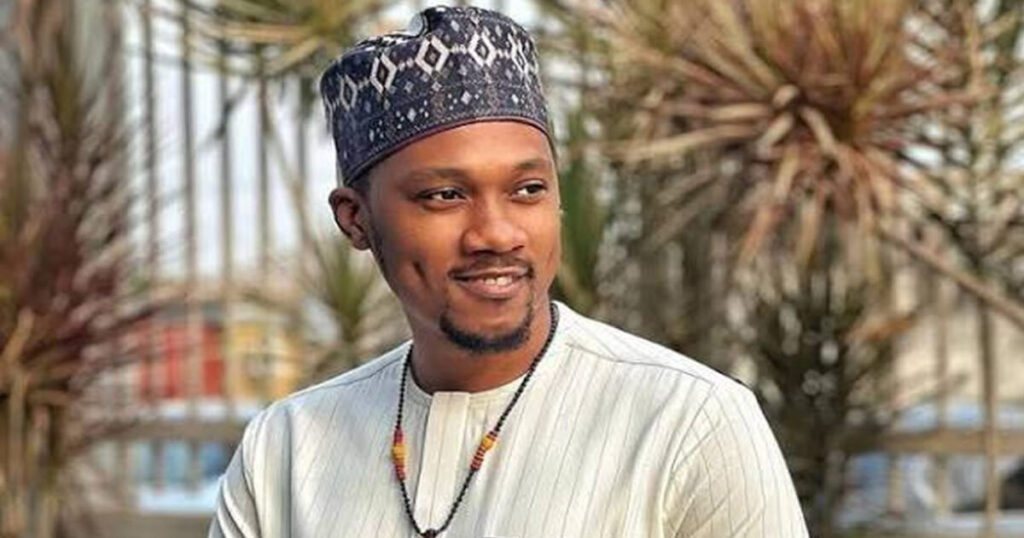
Actor and filmmaker, Baaj Adebule, speaks with ANJOLA DAWODU about his career, lifestyle and other issues
You studied Economics at Covenant University. What convinced you to abandon a stable career for Nollywood?
“‘Abandon’ is such a strong word, but yes, I did leave. I worked a 9-to-5 job for about 18 months, and honestly, it was a good job. I had great bosses, good working hours, and I didn’t even have to wear a suit and tie; it was a relaxed environment. It was also a young company at the time, and now it’s grown into something pretty big, so sometimes I wonder what could have been if I had stayed.
But beyond all of that, there was this constant feeling I couldn’t shake—the feeling that I wasn’t where I was supposed to be. And once that feeling settles in, it’s very difficult to ignore. The funny thing is, I didn’t even know where I was supposed to be. I was just very aware that where I was at the time wasn’t it.
So, I started what I would call a scavenger hunt to find myself; to figure out what I wanted to do with my life and what kind of future I wanted. In your 20s, you’re essentially laying the foundation for the next few decades, so those decisions matter.
I stumbled on an audition for a role on ‘Tinsel’. At that time, I didn’t even know what the show was about, but I went for it anyway. I got to do a couple of scenes, and after trying out so many other things before that, something about acting just clicked. It felt like what I had been searching for. I didn’t know how I was going to go about it, but I knew this was it.
That said, I didn’t immediately quit my job. It took a couple of months to gather the courage, because leaving a stable job to go into entertainment is not something I would advise anyone to do lightly. Eventually, though, I took that leap.
Looking back, what made you realise acting was more than just a passion?
At the time, I had a lot of fears, especially about survival. I kept asking myself how I was going to make enough money to sustain myself because I wasn’t getting consistent work yet. I would say I was a bit misled by the lifestyle of established stars. From the outside, it looked like once you achieve even a small level of success, you would be able to take care of yourself.
I’m not a very high-maintenance person, so I thought that would be enough. That was the point where it moved from being just something I loved doing to something I could realistically do for a living.
That’s when I started seeing myself introducing my profession confidently, saying, ‘I’m an actor and a filmmaker, and this is what I’m going to do for the rest of my life.’ Once I saw that possibility, it was no longer just about passion. It became about survival and building a life.
So I knew I had to get serious—learn properly, build relationships, make the right moves, and acquire the skills needed to succeed. At that point, it stopped being just about love for the craft and became about life itself. That’s when the real work began.”
How did appearing on ‘Tinsel’ change your career trajectory?
That project actually decided my life, because your career is such a huge part of your life. ‘Tinsel’ shaped my career and, in many ways, my entire direction.
The experience itself was magical. The lights, the actors, the entire production setup; it all felt surreal. It was my first real exposure to that world, and it completely reshaped my mindset. It made everything feel possible and gave me the confidence that I had made the right decision.
As an actor and filmmaker, which role do you enjoy more, being in front of the camera or behind it?
It really depends on the season of my life and where I am mentally, spiritually, and even physically at the time. There are periods when I absolutely love being behind the camera, creating stories and bringing ideas to life. And, there are other times when I feel deeply connected to acting and being in front of the camera.
There are moments when every part of you is itching to tell a particular story. At that point, you just know it’s time to make a film, and it has to be behind the camera. Then, there are other moments when you’re so immersed in a character that all you want to do is explore that role and bring it to life.
So, it’s not really about choosing one over the other. It’s more about where I am in my life at that moment. My mental, spiritual, physical, and even financial state can influence that decision.
What does a healthy relationship mean to you?
A healthy relationship is one where you’re not made to feel small or insignificant. Obviously, there should be no form of abuse, whether emotional, physical, or otherwise.
It’s about being with someone you can call home; someone who gives you love, respect, appreciation, and acknowledgment. Someone you can truly build a life with.
Over time, you realise that while money is important, it’s not everything. There’s so much more to a meaningful relationship. You need someone who can stand with you during tough times, not someone who adds to your struggles or makes things harder.
What are three qualities you cannot compromise on in a partner and why?
First, I need someone with a unique sense of life, morality, and conscience. By ‘unique’, I mean someone who can think beyond societal programming and the structures that most people follow without question. That’s very rare, and I’ve realised it’s something I really value.
Second is intelligence; not necessarily academic intelligence, but the way a person thinks, communicates, and approaches life. You can tell when someone is truly knowledgeable just by how they handle conversations, disagreements, and situations. Communication is extremely important to me.
Third is being family-oriented. I take family very seriously. Once you decide to create a family, they should become the priority. Career and money are important, but to me, they are simply tools to create a good life for your family. That mindset matters a lot to me.
How did being the youngest of nine children shape your personality and ambition?
I wouldn’t say I was isolated, but I was significantly younger than everyone else. By the time I was born, the youngest of my siblings was already six or seven years old. So, it felt like I was growing up around people but still somewhat by myself.
That meant I had to learn how to entertain myself. If I was bored, I had to create something in my mind or find ways to stay engaged. I think that played a huge role in developing my imagination.
As for ambition, I’ve never really been driven by material success in the conventional sense. I have always just wanted to experience life fully—to explore, grow, and impact others in whatever way I can.
I don’t know if that mindset came from my childhood, but it’s always been a part of who I am. My ambition is more about living a full life—mentally, spiritually, physically, and even emotionally.
When the cameras go off, who is Baaj Adebule?
I am just a regular guy who enjoys simple things, such as watching movies, spending time with friends and family, and experiencing life.
I enjoy meeting new people, exploring different cultures, and trying new foods. Those experiences excite me.
I’d say I’m a ‘yes’ person. If something sounds interesting or new, I’m usually willing to try it. I just like to enjoy life, relax, laugh, and take things as they come.
Do you feel pressure to maintain a certain image because you’re a public figure?
“Sometimes, yes; but mostly in small ways. For example, when you’re attending events or premieres, there’s a bit of pressure to look good. But honestly, that’s not a bad thing.
The more significant pressure comes on set. When you’re working with talented directors, writers, and actors, you feel a responsibility to deliver. You don’t want to let anyone down.
That kind of pressure actually motivates me. Even when I’m tired or we’ve been shooting for long hours, it pushes me to keep going and give my best.
Your comment about not wanting to marry a virgin stirred huge debate. Do you think people misunderstood you?
Oh, absolutely; that’s expected. People usually react to soundbites rather than the full context of a conversation.
The entire discussion wasn’t put out there, so it was easy for it to be misunderstood. What I was actually talking about was the level of maturity and discipline it takes for someone to make certain choices about themselves.
My perspective also came from personal experiences at a young age, which shaped how I viewed things at the time. But without the full context, it’s easy for people to misinterpret what was said.
If you could rewrite the beginning of your career, is there anything you would do differently?
Yes. I wouldn’t allow myself to fully buy into the idea that you must suffer excessively to ‘pay your dues’. While it’s true that hard work and patience are necessary, that mindset was often abused.
A lot of young actors ended up being taken advantage of—put in situations they shouldn’t have been in—because they believed that was the price of success.
Aside from that, though, I think most of my experiences helped shape who I am today, so I wouldn’t change much else.
How do you handle criticism from people who don’t understand the entertainment industry?
If I know that the criticism is coming from a place of limited understanding, I don’t take it too seriously.
But even when it comes from an informed place, it’s still just an opinion. I listen, analyse it, take whatever wisdom I can from it, and discard the rest.
With time and experience, you develop the maturity to process criticism without letting it affect your mental health or daily life.
How do you draw the line between privacy and openness?
I learnt this very early in my career. When I first became popular, I used social media like everyone else. I shared everything, from family to personal moments.
But over time, I noticed that people tend to project their own realities onto what they see online. That can easily become negative.
So, I made a conscious decision to keep my personal life private. I only share what I’m comfortable with, and that decision has worked very well for me.
Would you keep a relationship completely off social media?
Absolutely. A personal relationship is private; it’s not meant for a social space.
My social relationships—like work and colleagues—can exist online, but my personal life stays offline. That’s just how I see it.
What’s your favourite meal?
Pounded yam with any good soup, especially something like a Cross River-style soup. I’m always down for that.
Source link